
You have searched “types of laser treatment” and found pages explaining ablative versus non-ablative lasers.
But none answer the question you actually came with: which laser is right for your specific concern?
Here is the short answer. Different lasers target different things. There is no single “best” laser.
Pigmentation, acne scars, fine lines, and skin laxity each respond to different laser categories. The right choice depends on your concern, your skin tone, and how much downtime you can tolerate.
This article will help you match your concern to the right laser category, understand how each type works, and know what questions to ask before committing to treatment.
Key Takeaways
Types of laser treatment fall into four main categories:
- Ablative lasers (removes skin layers for deep resurfacing)
- Non-ablative lasers (heats deeper layers without surface damage)
- Fractional lasers (treats a fraction of the skin for faster healing)
- Pulsed dye lasers (targets blood vessels for redness and rosacea)
For most Malaysians with Fitzpatrick III to V skin tones, non-ablative and fractional lasers are typically safer starting points than aggressive ablative options.
Cost at Pure Touch: RM360–RM3,600 per session depending on laser type and treatment area.
How to choose:
- Surface pigmentation → start with non-ablative lasers
- Acne scars or deeper concerns → fractional lasers may be more suitable
- Not sure → a professional consultation is recommended. WhatsApp Us to book appointment
Four Main Types of Laser Treatment
|
Laser Type |
How It Works |
Best For |
Downtime |
Asian Skin Consideration |
|
Ablative |
Removes outer layers of skin |
Deep scars, severe sun damage |
7–14 days |
Higher risk of PIH for Fitzpatrick III–V |
|
Non-ablative |
Heats dermis without surface damage |
Mild wrinkles, pigmentation, maintenance |
24–48 hours |
Lower risk of PIH; gradual improvement over multiple sessions |
|
Fractional |
Treats microscopic columns of skin, leaving bridges of untreated skin |
Acne scars, uneven texture, early wrinkles |
3–7 days |
Moderately safe for darker skin |
|
Pulsed Dye / IPL |
Targets blood vessels or broad-spectrum light |
Redness, rosacea, spider veins |
Minimal |
IPL less predictable on darker skin tones. Fitzpatrick IV–V |
Tip: This table is an overview of laser categories. For a more personalized plan, consultation is recommended. Visit Pure Touch Clinics today!
1. Ablative Lasers
Ablative lasers (CO2, erbium) remove outer skin layers entirely. CO2 lasers penetrate deeper and trigger significant collagen remodelling. Erbium lasers are gentler, with faster healing but less dramatic results.
They suit patients with deep scars or severe photoaging who can tolerate 7–14 days downtime and strict sun avoidance afterward.
Caution for darker skin: Full ablative CO2 carries meaningful PIH risk for Fitzpatrick IV to V. If recommended without Fitzpatrick assessment, that is a red flag.
2. Non-Ablative Lasers
Non-ablative lasers heat the dermis without removing the epidermis. This stimulates collagen production while leaving the skin surface intact. Options include Nd:YAG, pico lasers, and toning lasers like the Carbon Peel.
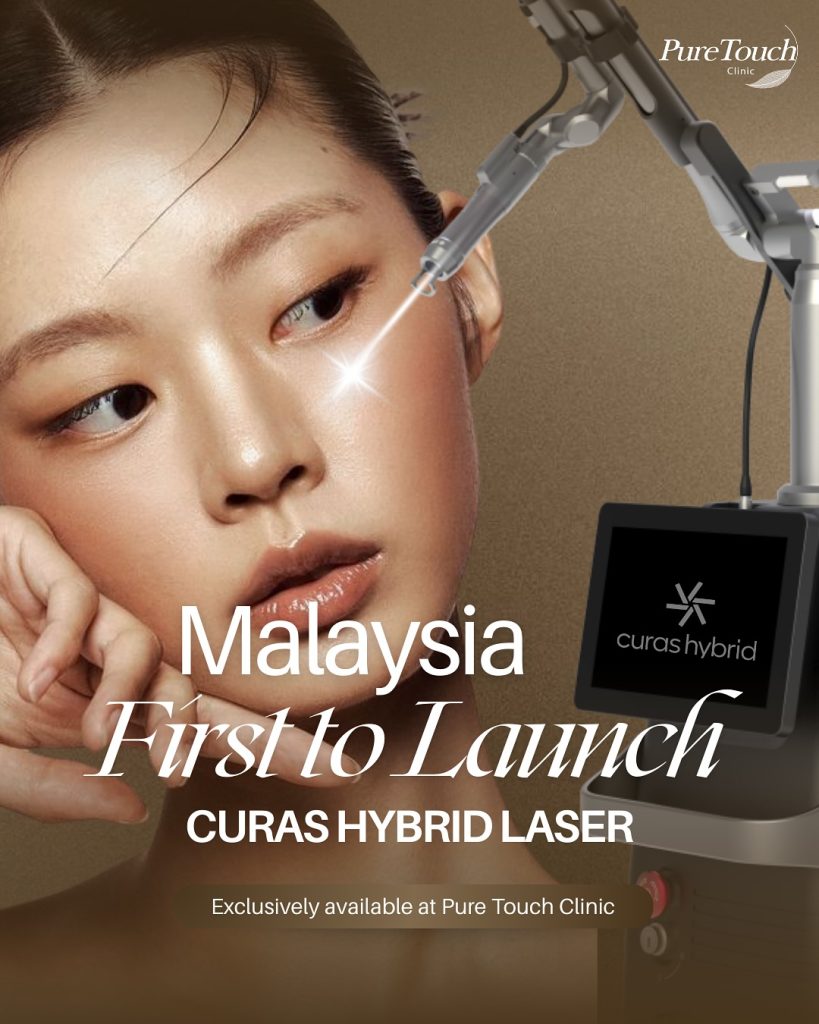
At Pure Touch, the Curas Hybrid Laser System combines multiple wavelengths in a single platform. This allows practitioners to address pigmentation, texture, and mild laxity in one session, with recovery typically limited to 24–48 hours.
These suit patients seeking gradual improvement with minimal downtime. Results are cumulative across sessions, so expect to commit to a programme rather than a single treatment.
Many patients in their 40s find that the laser alone does not address volume loss. Our guide on aesthetic concerns in your 40s explains when combination protocols make sense.
3. Fractional Lasers
Fractional lasers treat a fraction of the skin surface, leaving microscopic columns of untreated tissue between treatment zones. These “bridges” of healthy skin speed healing and reduce complication risk.
Fractional technology exists in both ablative (fractional CO2, fractional erbium) and non-ablative forms.
They suit moderate acne scarring, uneven texture, or early wrinkles. For deep ice-pick scars, fractional is often combined with RF microneedling for better outcomes.
Wondering whether microneedling malaysia options suit your scarring better? That page explains when combination protocols produce better outcomes.
4. Pulsed Dye and IPL
Pulsed dye lasers target haemoglobin in blood vessels, effective for rosacea and broken capillaries.
IPL uses broad-spectrum light and is less precise. For Fitzpatrick IV–V skin, Nd:YAG or pico lasers are safer for pigmentation work than IPL.
If your concern includes under-eye hollowing or dark circles alongside skin texture, midlife under-eye concerns explain when combination approaches work better than laser alone.
Match Your Concern to the Right Type of Laser Treatment
Start with the question that matters most: what are you trying to treat?
|
Your Concern |
Laser Options to Consider |
Pure Touch Clinic Services |
Notes for Asian Skin |
|
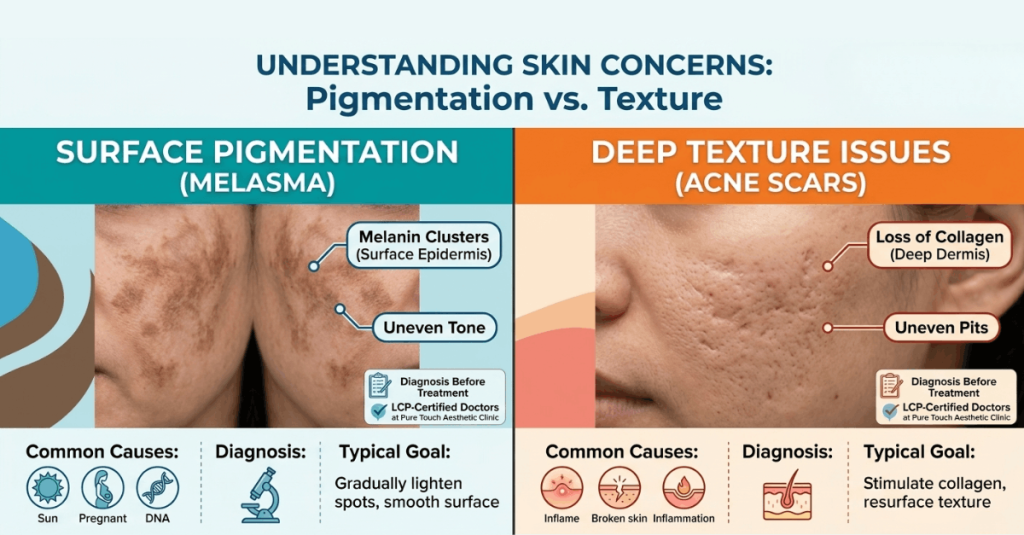
Pigmentation (melasma, sunspots) |
Pico laser, Q-switched Nd:YAG, laser toning |
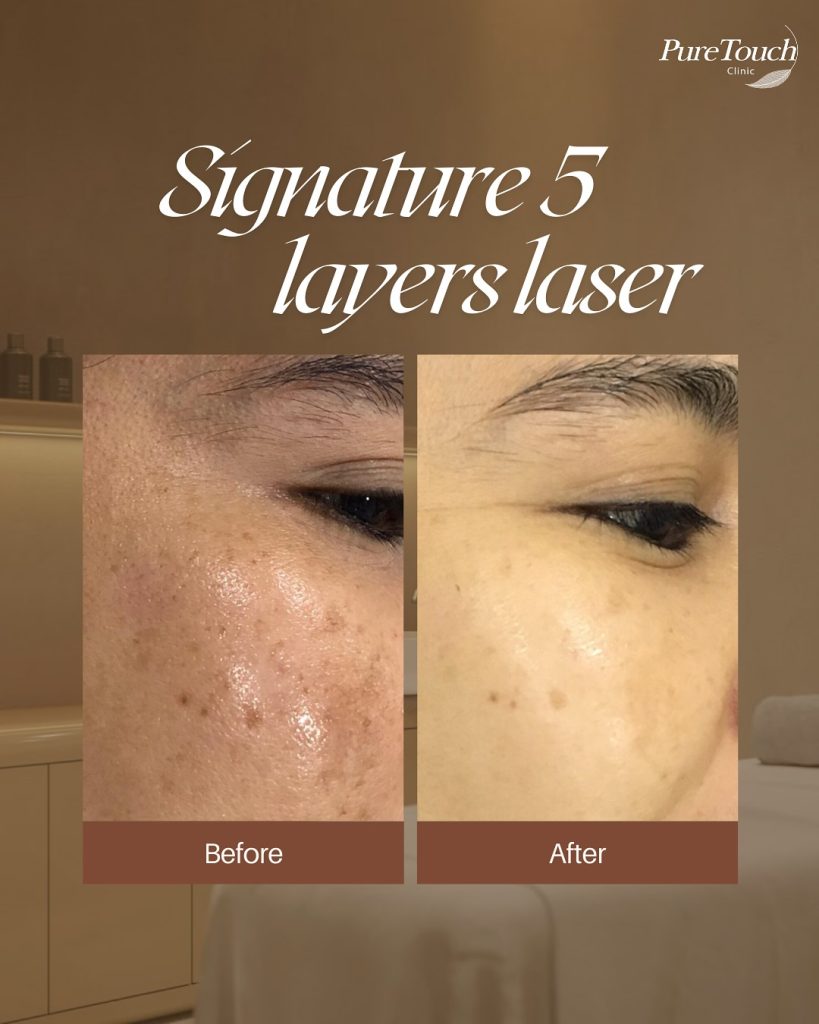
Curas Hybrid laser, Pure Touch signature 5 layers laser and OPT Rejuvenation Facial |
Lower energy settings reduce PIH risk, multiple sessions may be needed |
|
Acne scars (boxcar, rolling, ice-pick) |
Fractional CO2, fractional erbium, RF microneedling |
FSR Fractional Skin Resurfacing, Intensif RF Microneedling |
Fractional preferred over fully ablative for faster healing and safer results |
|
Fine lines and wrinkles |
Non-ablative fractional, Curas Hybrid Laser System |
Curas Hybrid Laser, Signature 5-Layer Laser |
Non-ablative offers lower downtime |
|
Skin laxity and sagging |
Non-ablative RF, HIFU, combination protocols |
Intensif RF Microneedling, Curas Hybrid Laser System, OPT Skin Rejuvenation |
Often combined with injectables for optimal results |
|
Redness, rosacea, visible capillaries |
Pulsed dye laser, IPL |
Not specifically listed; clinic may assess suitability case-by-case |
IPL less predictable for Fitzpatrick IV–V |
|
Dull skin and large pores |
Carbon peel laser, toning laser, OPT |
Carbon Peel Laser, Toning Laser, OPT Skin Rejuvenation |
Maintenance-focused treatments, not one-off |
In short: Surface concerns (pigmentation, dull skin, fine lines) usually respond to non-ablative or gentler options. Deeper concerns (acne scars, laxity) may require fractional or combination approaches with longer recovery.
Not sure? Book a consultation to determine the safest and most effective treatment plan for your skin type and concern.
Ready to Find the Right Laser?
Book a free consultation at Pure Touch. We will assess your skin, explain which lasers suit your goals, and provide transparent pricing. No obligation.
Noticing the early signs of skin aging but unsure whether the laser is right? That guide breaks down what responds well to treatment.
Is Laser Treatment Safe for Asian Skin?
Yes, laser treatment can be safe for Asian skin when the right laser type and settings are used.
Most Malaysians fall into Fitzpatrick skin types III–V. These skin tones have more melanin, which provides natural sun protection but also increases the risk of post-inflammatory hyperpigmentation (PIH) after laser treatment.
The concern is real. Aggressive ablative lasers, high-energy IPL, or poorly calibrated treatments can trigger PIH, which may take weeks to months to fade. That’s why careful assessment and a customized approach are essential.
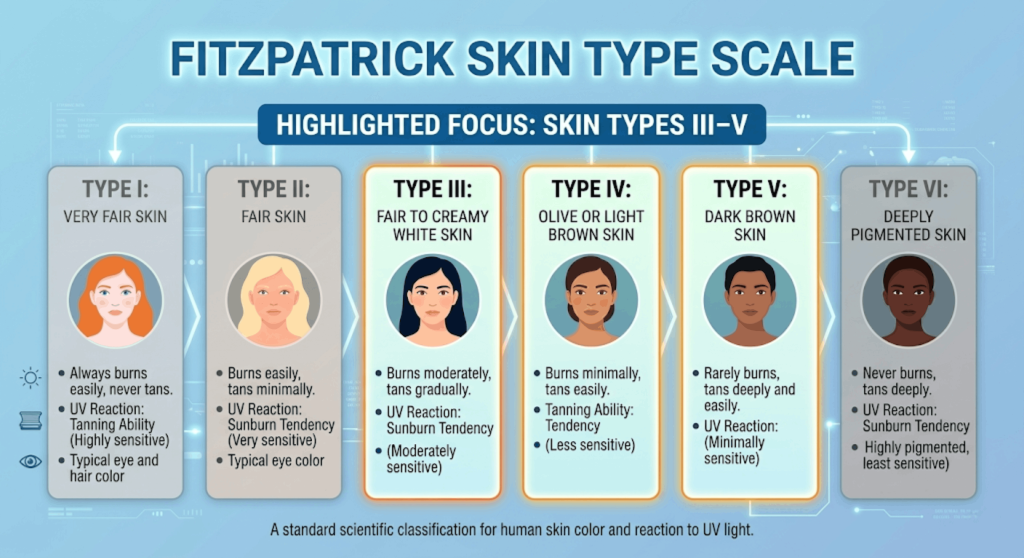
Laser Safety by Skin Type (Fitzpatrick IV–V)
|
Laser Type |
Subtype / Example |
Safety for Asian Skin |
|
Ablative |
Full CO2, Erbium |
⚠ Higher PIH risk |
|
Non-ablative |
Nd:YAG |
✓ Safe |
|
Fractional (ablative) |
Fractional CO2 |
⚠ Moderate PIH risk |
|
Fractional (non-ablative) |
Non-ablative fractional CO2, Erbium |
✓ Safe |
|
Pulsed Dye / IPL |
PDL, IPL |
⚠ Use with caution |
Notes:
- Non-ablative Curas Hybrid Laser and 5-Layers Laser in Pure Touch Clinic are the safest starting points for Fitzpatrick III–V skin.
- Fractional options can work well with conservative settings.
- If a clinic does not assess your Fitzpatrick skin type before recommending a laser, consider this a red flag.
Hormonal changes can complicate pigmentation treatment. If your skin concerns coincide with menopause, understanding how menopause affects your skin helps identify the root cause before choosing a laser.
How Laser Treatments Work
Lasers are concentrated beams of light, each tuned to a specific wavelength that determines what tissue it targets. This precision allows treatments to address your concern effectively while minimizing downtime and risk.
- Melanin (pigment in skin): Targets pigmentation issues such as sunspots, melasma, and hair removal.
- Water (skin tissue fluid): Helps with resurfacing, scar remodeling, and improving skin texture.
- Hemoglobin (blood vessels): Treats redness, rosacea, and spider veins.
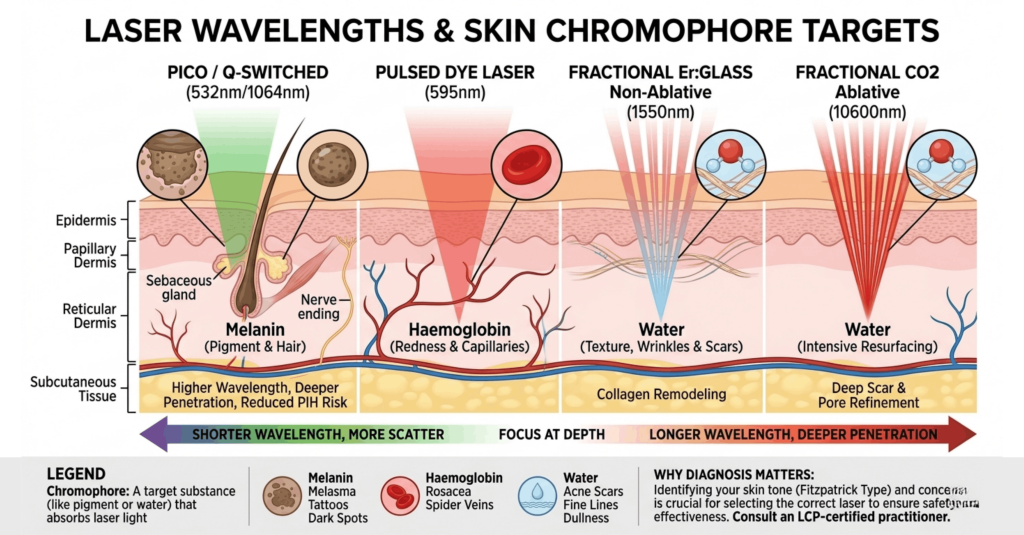
A laser optimised for melanin will not resurface scars effectively, and a laser optimised for water will not clear pigmentation. Matching the laser to your concern is not a marketing gimmick. It is physics.
This is why clinics with multiple laser platforms, like Pure Touch, can offer more precise and customized treatments than clinics with a single machine.
Concerned about pigmentation that worsens despite treatment? Laser therapy for pigmentation requires a diagnosis-first approach to determine which settings will help rather than harm.
What to Expect: Sessions, Recovery, and Results
Laser treatment is not a one-visit solution. Understanding the typical journey helps you plan realistically.
|
Laser Type |
Sessions |
Interval |
Downtime |
Results |
|
Ablative |
1–2 |
3–6 months |
10–14 days |
After healing completes |
|
Non-ablative |
4–8 |
2–4 weeks |
24–48 hours |
After 2–3 sessions |
|
Fractional |
3–6 |
4–6 weeks |
3–7 days |
After 2–3 sessions |
|
Pulsed dye / IPL |
2–4 |
4–6 weeks |
Minimal |
After healing completes |
Recovery Timeline
How your skin feels after treatment varies by laser type:
- Non-ablative lasers: Mild redness; usually comfortable the next day.
- Fractional lasers: Peeling and pinkness for several days as new skin emerges.
- Ablative resurfacing: Longer social downtime; strict sun protection needed.
Tip: Follow clinic’s written aftercare instructions carefully. Sun exposure during healing can increase the risk of post-inflammatory hyperpigmentation (PIH), especially for Asian skin types.
Considering face-lifting alongside resurfacing? See how the laser fits into a v shape treatment plan.
Laser Treatments at Pure Touch
Pure Touch offers laser treatments across multiple categories. Here is how each treatment maps to the laser types discussed above.
|
Treatment |
Laser Type |
Best For |
|
Carbon Peel Laser |
Non-ablative |
Dull skin, large pores, oily skin |
|
Toning Laser |
Non-ablative |
Pigmentation, skin brightening, maintenance |
|
5-Layers Laser |
Non-ablative |
Pigmentation, pores, lifting, eye rejuvenation |
|
Curas Hybrid Laser System |
Non-ablative |
Pigmentation, texture, mild laxity |
|
OPT Skin Rejuvenation |
OPT (Optimal Pulse Therapy) |
Pigmentation, redness, skin rejuvenation |
|
Lips Lightening Laser |
Non-ablative |
Dark lips, lip pigmentation |
|
Intensif RF Microneedling |
Fractional |
Acne scars, pores, stretch marks, anti-ageing |
|
FSR Fractional Skin Resurfacing |
Fractional |
Deep scars, collagen remodelling |
Most patients start with non-ablative options like Toning Laser or the Curas Hybrid Laser System. These deliver gradual improvement with minimal downtime. Patients with moderate-to-severe scarring may progress to fractional treatments like Intensif RF Microneedling after consultation.
How Much Does Laser Treatment Cost in Malaysia?
Laser pricing varies depending on the technology, treatment area, and number of sessions.
Pure Touch Laser Treatment Pricing
|
Treatment |
Per Session |
Package Option |
|
Carbon Peel Laser |
RM480 |
RM2,200 (5 sessions) |
|
Toning Laser |
RM480 |
RM2,200 (5 sessions) |
|
5-Layer Laser (Toning + Pores + Pigmentation + Lifting + Eye) |
RM960 |
RM3,600 (5 sessions) |
|
OPT + 5-Layer Laser |
RM1,210 |
RM4,600 (5 sessions) |
|
OPT Skin Rejuvenation |
RM450 |
RM4,000 (10 sessions) |
|
Lips Lightening Laser |
RM360 |
RM1,200 (5 sessions) |
|
Intensif RF Microneedling |
RM3,200 |
RM8,100 (3 sessions) |
|
FSR Fractional Skin Resurfacing |
RM3,600 |
RM9,000 (3 sessions) |
For the latest pricing details, please reach out to our team. We recommend booking a consultation before making any decisions, as we are here to assist you and address your concerns.
Everyone deserves to feel beautiful, and we’re here to support you in achieving that with confidence.
5 Questions to Ask Before Choosing a Laser Clinic
These five questions help you evaluate whether a clinic’s recommendation is based on your skin or their equipment inventory.
1. "Which laser type are you recommending, and why does it suit my concern?"
- Good sign: The practitioner names a specific laser category, explains why it targets your concern, and discusses alternatives.
- Red flag: Vague answers like “our laser is good for everything” or refusal to explain the mechanism.
2. "How many sessions will I need, and what is the total cost?"
- Good sign: A clear session range (e.g., “typically 4–6 sessions”) with package pricing options.
- Red flag: Evasive answers, pressure to “see how it goes,” or hidden costs revealed later.
3. "What are the risks for my skin type?"
- Good sign: The practitioner asks about your Fitzpatrick type, acknowledges PIH risk, and explains mitigation.
- Red flag: Dismissing the question or claiming “our laser is safe for everyone.”
4. "What does recovery look like, and will I receive written aftercare instructions?"
- Good sign: Day-by-day recovery expectations, written aftercare protocols, and follow-up scheduling.
- Red flag: Vague reassurances like “you’ll be fine” with no documentation.
5. "What happens if I don't see results after the recommended sessions?"
- Good sign: A clear progress assessment process, willingness to adjust the protocol, and honest expectation-setting.
- Red flag: Guarantees of specific results or pressure to commit to more sessions upfront.
Why Pure Touch?
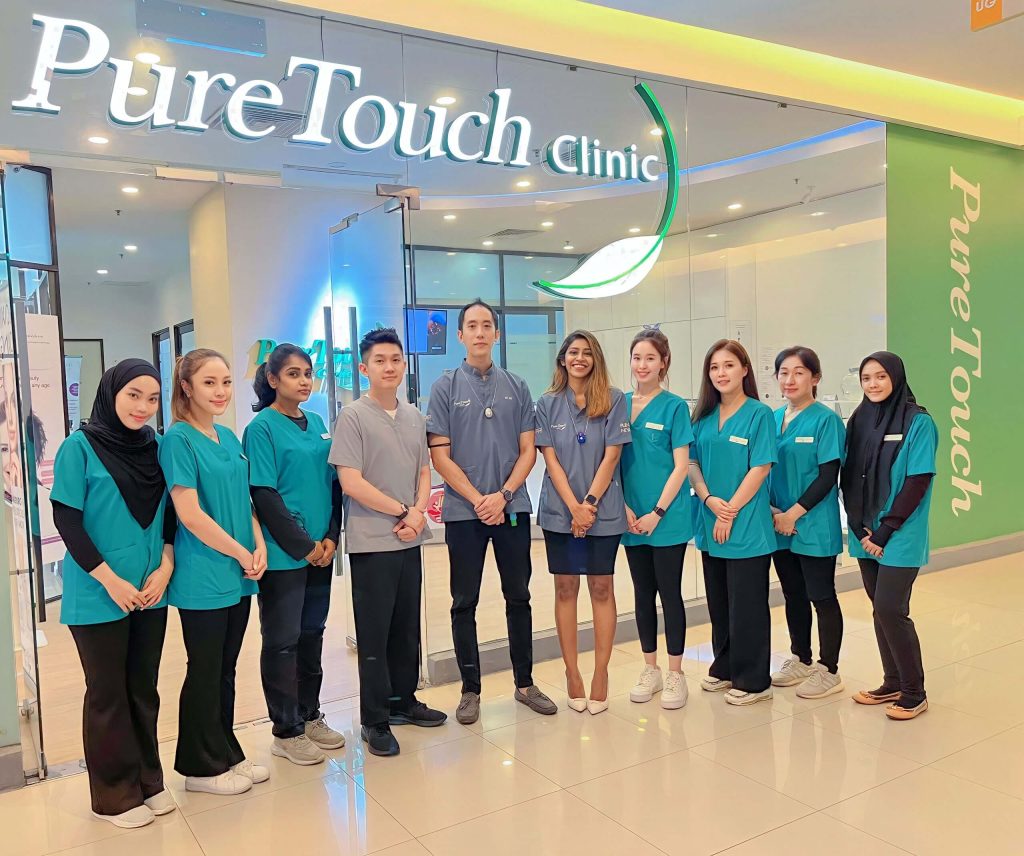
Pure Touch is a doctor-led aesthetic clinic with LCP-certified practitioners and over 20 years of experience treating Malaysian skin types.
- Diagnosis before treatment: Every laser recommendation begins with a skin assessment, not a sales pitch. If the laser is not the right fit, we will tell you.
- Multi-platform capability: We operate multiple laser systems including the Curas Hybrid Laser System (2024 technology) for precise treatment matching.
- Fitzpatrick-aware protocols: Our practitioners calibrate settings for Fitzpatrick III–V skin as standard practice.
- Transparent pricing: Published pricing with package options. No hidden fees. Free initial consultations.
- Two locations: Bangsar South and Neo Damansara (Petaling Jaya), both in the Klang Valley.
Frequently Asked Question (FAQ)
What is the difference between ablative and non-ablative lasers?
Ablative lasers remove the outer skin layer entirely, triggering deep resurfacing and collagen remodelling.
Non-ablative lasers heat the dermis without breaking the skin surface, offering gentler treatment with shorter recovery. Ablative suits severe scarring; non-ablative suits maintenance and gradual improvement.
Is laser treatment safe for darker Asian skin tones?
Yes, with the right laser and settings. Non-ablative Nd:YAG and pico lasers are generally safe for Fitzpatrick IV–V skin. Fractional lasers work well with conservative parameters. Full ablative CO2 and IPL carry higher PIH risk.
Always confirm your clinic assesses Fitzpatrick type before treatment.
How many laser sessions will I need?
Most patients require 3–6 sessions for noticeable results. Non-ablative toning lasers may need 4–8 sessions spaced 2–4 weeks apart. Fractional resurfacing typically requires 2–4 sessions spaced 6–8 weeks apart. Your practitioner should provide a session estimate during consultation.
How long is the recovery after laser treatment?
Recovery depends on laser type. Non-ablative lasers require 24–48 hours (mild redness, makeup safe next day). Fractional lasers require 3–7 days (peeling, pinkness, avoid sun). Full ablative resurfacing requires 10–14 days of social downtime with strict aftercare.
How much does laser treatment cost in Malaysia?
At Pure Touch, pricing ranges from RM360 per session (Lips Lightening Laser) to RM3,600 per session (FSR Fractional Skin Resurfacing). Package options reduce per-session cost. A 5-session toning laser package costs RM2,200.
What should I do before and after laser treatment?
Before: Avoid sun exposure for 2 weeks. Stop retinoids 5–7 days prior. Arrive with clean skin, no makeup.
After: Apply prescribed healing creams. Avoid direct sun for 2–4 weeks. Use SPF 50+ daily. Do not pick at peeling skin.
Does Pure Touch offer free consultations for laser treatment?
Yes, Pure Touch offers free initial consultations for laser treatment. However, it’s best to check with the clinic directly to confirm the latest details. Rest assured, nothing will be administered without your full consent.
You can contact us via WhatsApp or visit the nearest branch to book your consultation:
- Bangsar South: +6018-242 3536
- Neo Damansara: +6018-761 2025